
Wine before wine:
eight thousand years in a glass
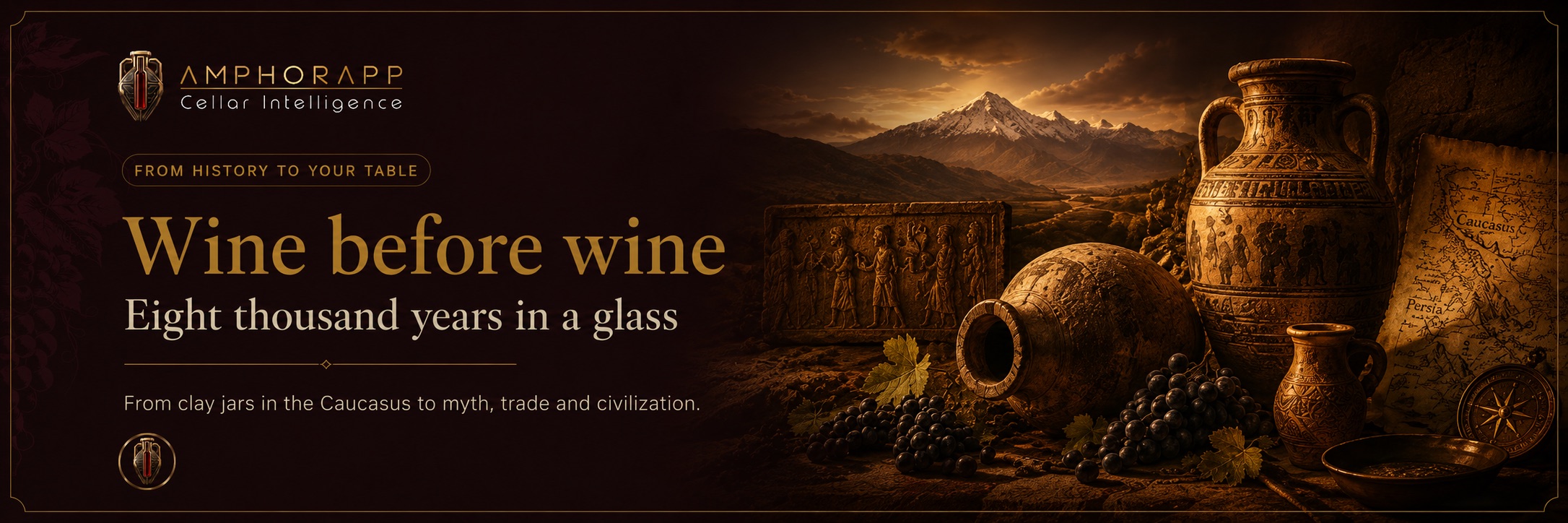
Long before there was a bottle, a label, or a crystal glass, wine was already being kept in clay jars in the mountains of the Caucasus — and, according to a Persian legend, discovered by accident inside a forgotten vessel. This is the story of how a fermented fruit became civilization, and a practical guide to serving, storing and pairing that history today, at your own table.
(the legend)
of Paris
How to read this history
The history of wine is reconstructed from incomplete evidence.
Clay fragments survive where wooden tools disappear. Chemical residues reveal what a vessel may once have contained, but not always how the beverage tasted or what its makers called it. Literary texts preserve cultural meanings, yet often reflect the lives of elites rather than ordinary farmers. Legends carry emotional and symbolic truth, but they are not archaeological records.
For that reason, this history distinguishes three kinds of knowledge:
Backed by the record
Information supported by archaeological remains, chemical analysis, inscriptions, manuscripts or documented events.
Cultural inheritance
Practices, beliefs and stories transmitted across generations and preserved as cultural heritage.
Open to revision
Scholarly conclusions drawn from incomplete evidence and therefore open to revision.
The earliest known evidence is not necessarily the first event that ever occurred — it is the earliest evidence that has survived and been identified.
The earliest known evidence of grape wine
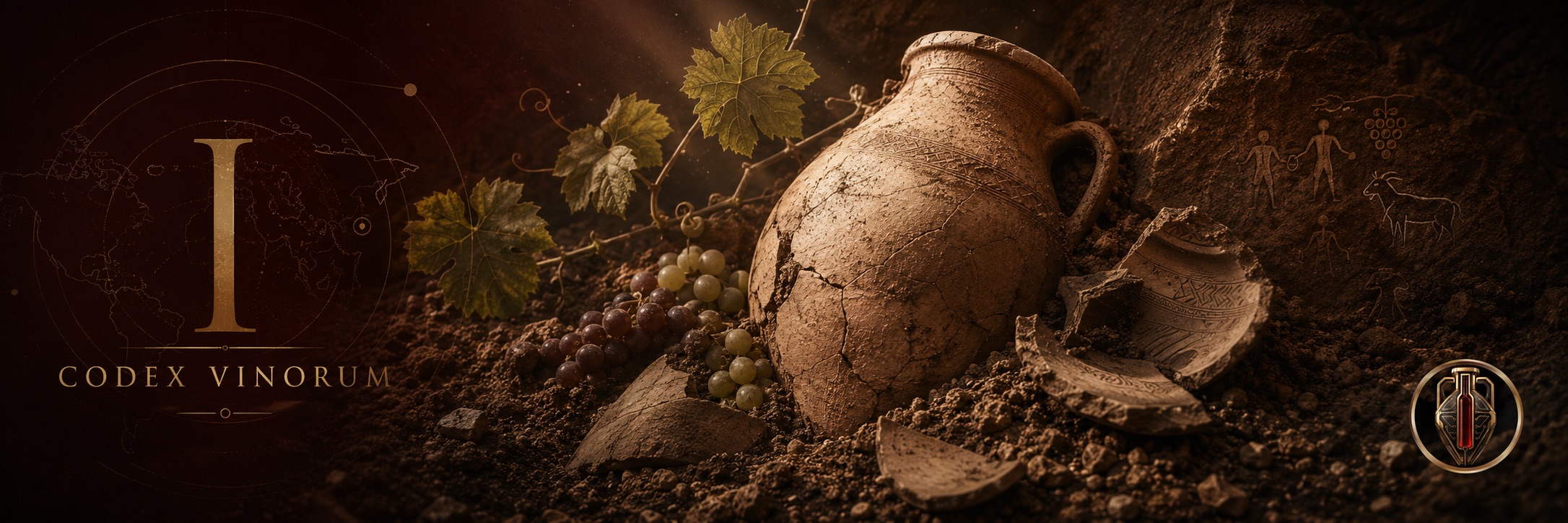
The oldest currently known biomolecular evidence of grape wine comes from Neolithic pottery discovered at Gadachrili Gora and Shulaveris Gora in present-day Georgia.
The vessels date to approximately 6000–5800 BC. Chemical analyses identified compounds consistent with grape wine, while archaeological and environmental evidence included grape pollen, starch and epidermal remains. These findings don't prove that wine was invented at one exact place or moment — they show that early farming communities in the South Caucasus were already producing, storing and consuming grape wine more than eight thousand years ago.
The jars were large enough to serve several purposes. Grapes could be crushed and fermented inside them; the resulting wine could then remain in the same vessel for storage and communal service. At that stage, wine production wasn't yet separated into the modern sequence of press, fermentation tank, barrel, bottle and glass — one ceramic container could perform several of those functions.
Fermentation before microbiology
The people who produced these wines didn't know the biochemical mechanism of fermentation. They learned through observation: ripe grapes released sweet juice; crushed fruit began to bubble; sweetness gradually diminished; aroma and texture changed; sealed or protected vessels preserved the liquid; temperature and cleanliness affected the result.
Wild yeasts living on fruit, equipment and within the production environment converted grape sugars into alcohol and carbon dioxide. Fermentation may initially have occurred accidentally, but repeatable results required accumulated knowledge — the decisive development was therefore not merely discovering fermented juice, but learning how to reproduce it.
From wild vine to cultivated landscape
The Eurasian grapevine, Vitis vinifera, existed in wild populations before systematic viticulture. Over generations, communities selected vines for desirable traits such as sweeter berries, larger clusters, reliable yields, favorable ripening, useful color, resistance to local conditions and the ability to propagate from cuttings.
Viticulture changed the relationship between people and land — a cereal field could provide a crop within months; a vineyard demanded years of establishment and long-term care. Planting vines meant investing in a future harvest and remaining connected to a particular place. Wine was, therefore, one of humanity's early exercises in patience.
Qvevri: a living culture of clay
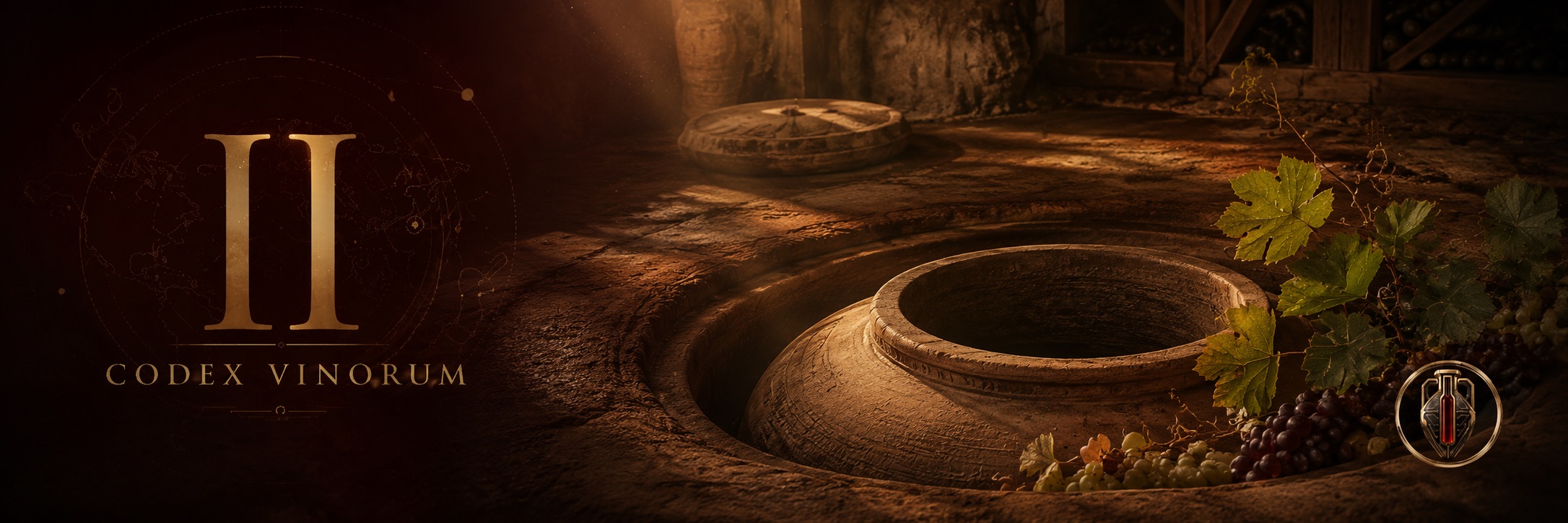
Modern Georgian qvevri winemaking shouldn't be described as an unchanged survival of one specific Neolithic recipe — the archaeological vessels and contemporary qvevri belong to different periods and cultural contexts.
What survives is a related principle: wine fermented, matured and stored in large earthenware vessels, often buried in the ground. A qvevri is an egg-shaped clay container. In traditional Georgian production, grape juice may ferment together with skins, seeds and sometimes stems. Burying the vessel helps moderate temperature, supports physical stability and integrates it into the architecture of the cellar.
In 2013, UNESCO inscribed the Ancient Georgian Traditional Qvevri Wine-Making Method on the Representative List of the Intangible Cultural Heritage of Humanity. UNESCO emphasizes not only the vessel, but also the knowledge surrounding grape growing, clay selection, vessel construction, communal harvest and the transmission of practice between generations.
The vessel as an ecosystem
Clay is not neutral in the same way as stainless steel. Its porosity, shape, internal coating, cleaning and burial conditions all affect production. Traditional earthenware winemaking requires control of vessel sanitation, permeability, extraction from skins and stems, fermentation temperature, oxygen exposure, settling, microbial stability and contact time. The egg-like form encourages natural circulation during fermentation; after fermentation, solids gradually settle toward the bottom, allowing clearer wine to remain above them.
More than a production technique
In Georgian communities, the marani — the traditional wine cellar — can serve as a place of work, hospitality, family identity and ritual. Wine belongs to the table, the toast, religious celebration and communal memory. Qvevri winemaking is therefore simultaneously agricultural knowledge, ceramic craftsmanship, household architecture, fermentation technology, social ritual and cultural inheritance. The vessel contains wine, but the tradition contains a community.
Areni-1: from fermentation to organized production
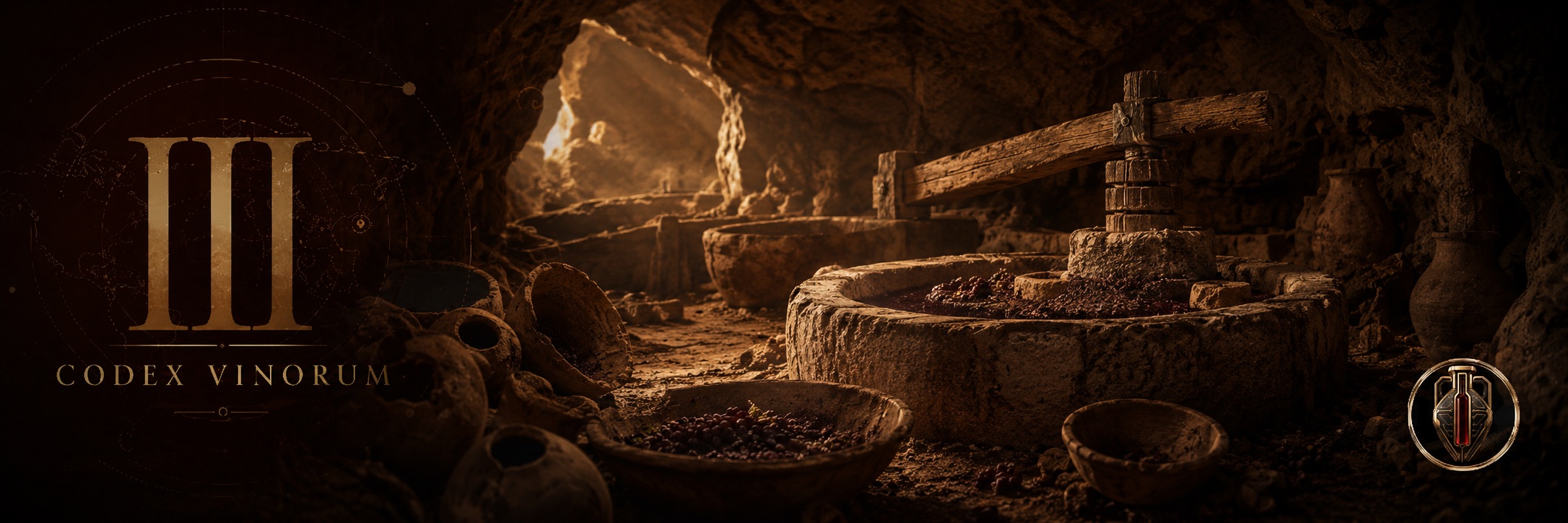
Georgia provides the earliest currently known biomolecular evidence of grape wine, but another South Caucasian site reveals something different: a structured installation devoted to production.
At Areni-1 Cave in present-day Armenia, archaeologists uncovered a complex dating to around 4000 BC. It included a pressing installation, clay vessels, grape remains and chemical evidence associated with wine. The site is widely described as the earliest known winery-like production facility discovered to date.
This distinction matters: Georgia provides earlier evidence that wine existed; Areni-1 provides later but clearer evidence of an organized production system.
The emergence of specialized work
A wine installation implies a sequence of planned operations: harvesting grapes, transporting them to the production area, crushing or pressing, collecting juice, transferring must, fermenting, storing, and serving or distributing. This required tools, labor, containers and knowledge of seasonal timing.
Areni-1 also contained ritual and funerary elements — that doesn't mean every vessel was used ceremonially, but it suggests that wine could already belong to both the practical and symbolic worlds. The same liquid could be nourishment, medicine, offering, status object and social bond.
Mesopotamia, Anatolia and the Iranian world
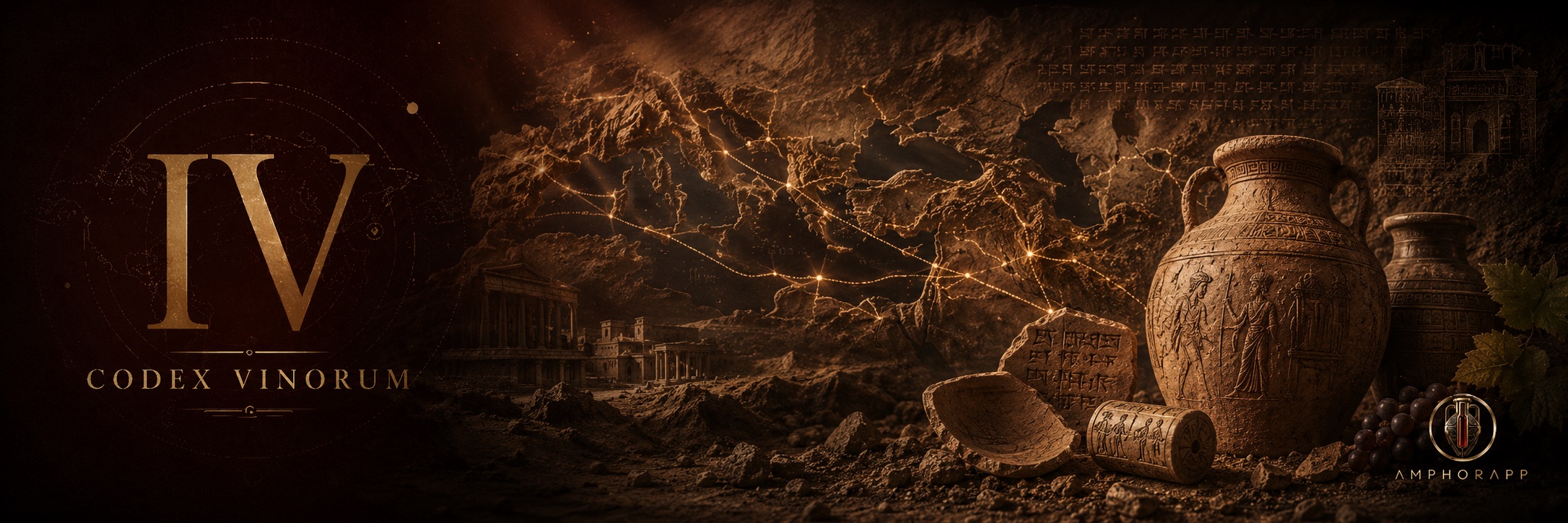
Wine didn't spread from one point through a single straight line. It moved through overlapping zones of cultivation, trade, migration and cultural exchange across the South Caucasus, Anatolia, northern Mesopotamia, the Levant and the Iranian plateau.
Some areas were naturally suited to vines. Others relied on trade from cooler uplands or more favorable valleys. Because vineyards require investment and wine is more difficult to transport than grain, it frequently acquired social and ceremonial value — appearing in palaces, temples, elite banquets, medicinal preparations, diplomatic gifts, religious offerings and long-distance trade.
Wine as technology
Producing wine consistently required the development of several technologies: vineyard selection, propagation by cutting, pruning, harvest timing, crushing and pressing, fermentation vessels, internal vessel coatings, closures, cool storage and transport containers. The history of wine is therefore inseparable from the history of agriculture, ceramics, woodworking, maritime trade and record keeping.
The legend of the Persian princess
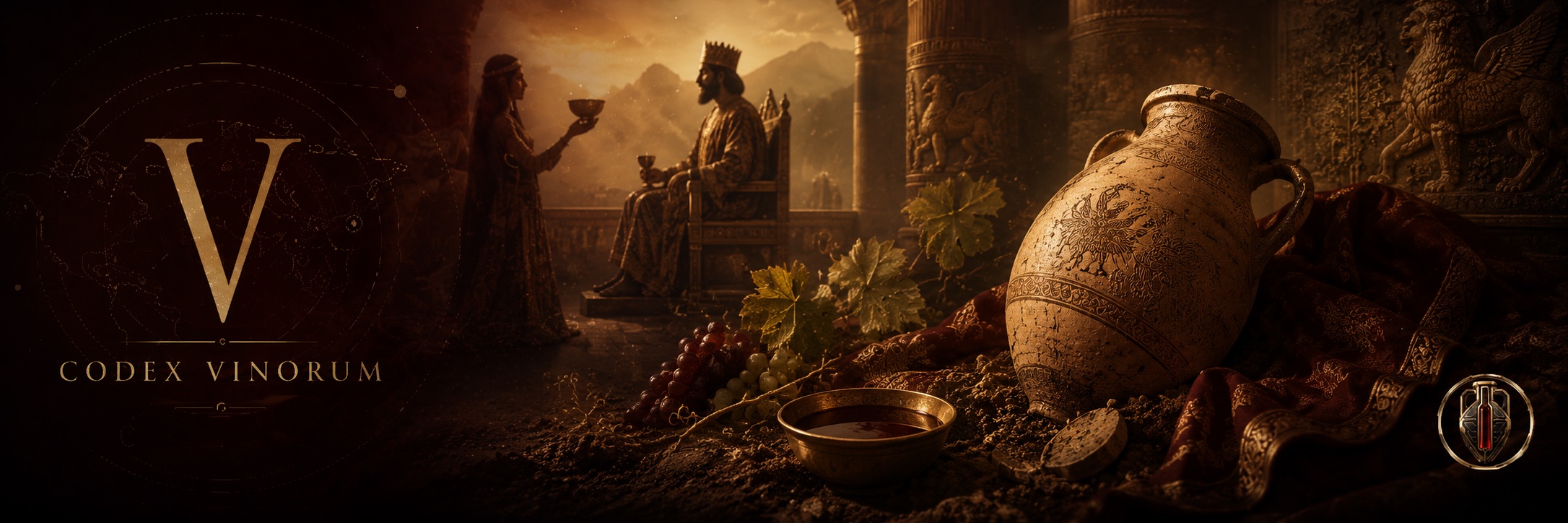
Among the many stories that try to explain how wine was “discovered,” none is as often told — or as beautiful — as the Persian legend tied to the court of King Jamshid.
The poison that became pleasure
Legend has it that Jamshid, the mythical king of Persia, stored fresh grapes in jars to have them out of season. One of these jars, forgotten, fermented on its own — and the liquid inside, sour and bubbling, was labeled poison and set aside.
One of the women in his harem, suffering from severe headaches and weary of court life, decided to drink the “poison” to end her own suffering. Instead of dying, she fell into a deep sleep and woke up hours later feeling light, joyful and free of pain.
Delighted with the effect, she told the king what she had done — and instead of punishing her, Jamshid was fascinated. He decreed that fermented grapes be produced deliberately from then on, and so, according to the Persian legend, wine was born.
It is, of course, a legend — not a historical record — but it carries something true about the very nature of wine: it is always born of a controlled accident, the exact moment sugar from the fruit meets the right yeast and becomes something else.
Curiously, modern science isn’t so far from the legend. Wild grapes really do ferment on their own when crushed and forgotten — the wild yeast present on the fruit’s own skin does the work without any human intervention. It’s quite possible that wine was “discovered,” literally, more than once, in more than one place, in the same accidental way the legend describes.
Egypt: the first great culture of the wine label
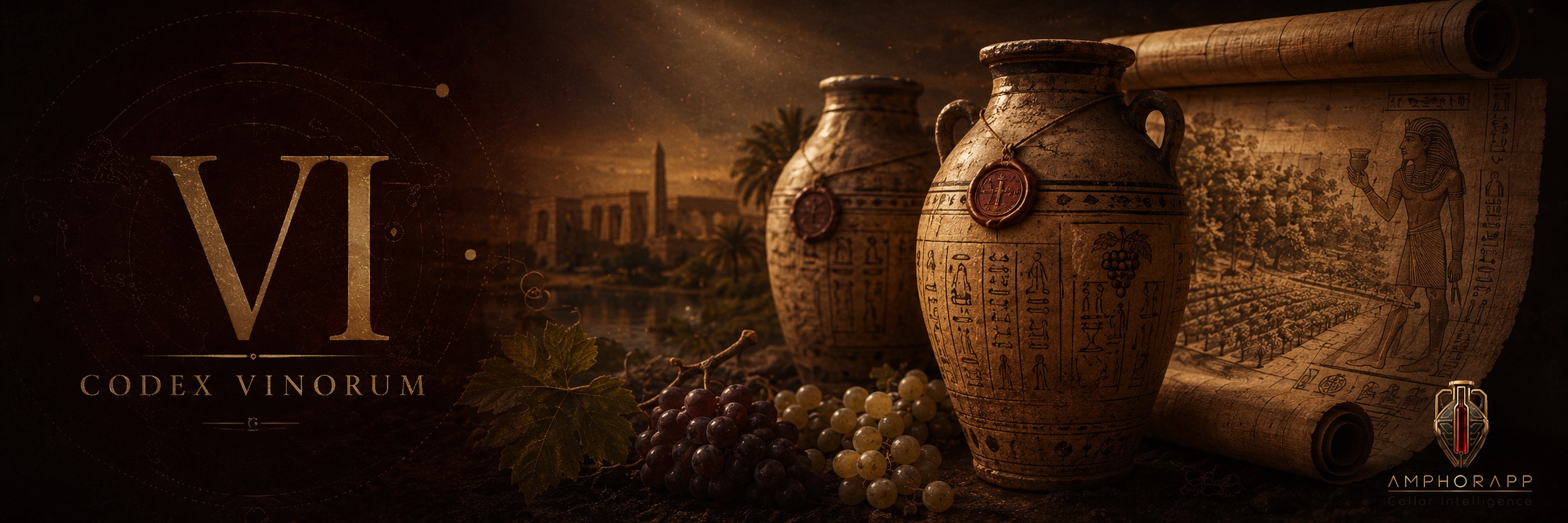
Ancient Egypt transformed wine into a highly organized product connected to estates, administration, ceremony and social status.
Vineyards appeared in artistic representations, tomb scenes and written records. Grapes were harvested, pressed and fermented in jars; some containers were sealed and marked with information that can look surprisingly familiar to a modern wine reader.
Thousands of jar-label fragments from the palace complex of Amenhotep III at Malqata preserve details such as the contents, regnal year, vineyard or estate, geographical source, donor, producer or responsible official, and intended occasion. One surviving label identifies wine from an estate in the western Nile Delta and records the year of production.
Vintage before the modern bottle
These records demonstrate that ancient administrators already recognized distinctions involving time, origin, responsible production, ownership, destination, and quality or intended use. This wasn't a modern appellation system, but it performed several related functions — it connected a liquid to a place, a harvest and an accountable producer. The principle behind a wine label is therefore ancient: this wine came from somewhere, was produced by someone, and belongs to a specific moment.
Wine and social hierarchy
Beer was widespread in Egyptian life, while wine was often more strongly associated with estates, royal households, temples, elite consumption and funerary provision. Wine vessels placed in tombs weren't merely decorative objects — they were part of a system of food, status and continuity imagined beyond death. In Egypt, wine became both beverage and record.
The Phoenicians: wine learns to travel
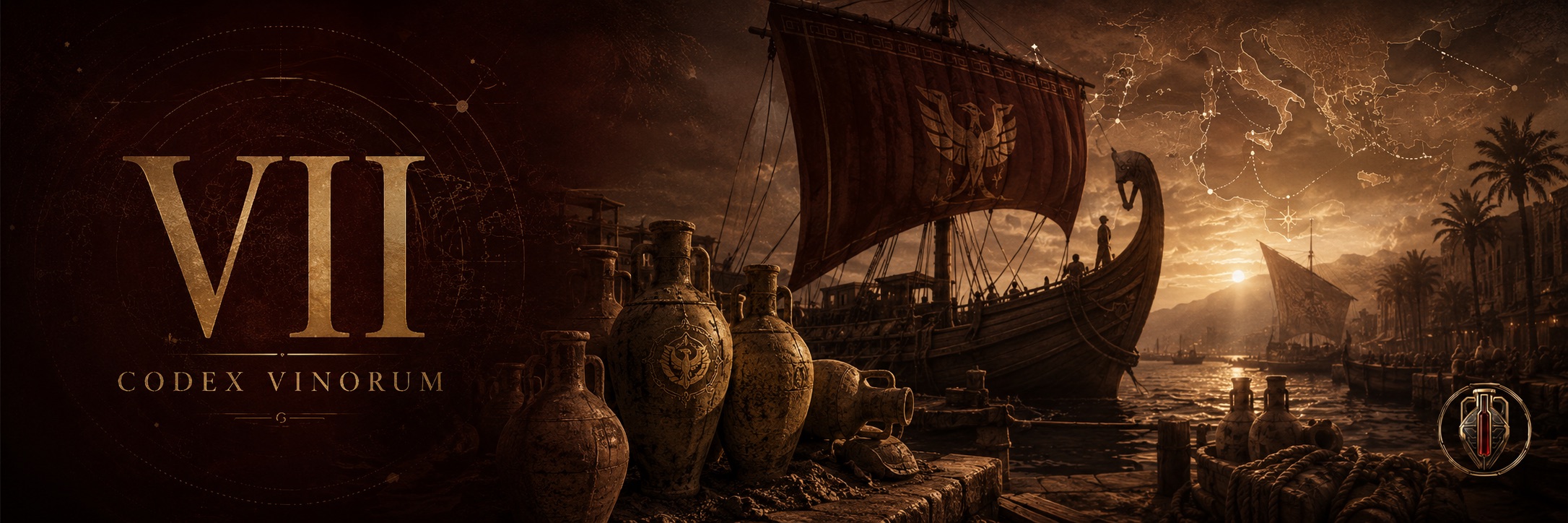
The Phoenician cities occupied a narrow coastal zone of the eastern Mediterranean. Limited agricultural land and exceptional maritime capacity encouraged the development of trade networks linking the Levant to Cyprus, North Africa, Sicily, Sardinia, Iberia and other Mediterranean regions.
Wine was one of the agricultural products moving through these routes. Archaeology at Tell el-Burak in present-day Lebanon has revealed a substantial Iron Age wine press connected to Phoenician production. Phoenician mobility and settlement are also associated with the movement of viticultural practices and wine-consumption traditions across parts of the Mediterranean.
The amphora becomes commercial infrastructure
Transport amphorae weren't all identical — their clay composition, shape, handles, rim, base, capacity, stamps and painted marks could indicate production zone, workshop, commercial network or period.
Phoenician and Cypriot amphorae found at shipwrecks and distant settlements reveal the geographic reach of maritime exchange; one Phoenician-inscribed amphora type produced on Cyprus has been found widely across the eastern Mediterranean. This made the amphora more than a jar — it was a standardized unit moving through an international logistics system.
Wine carries culture
Merchants didn't transport liquid alone — they also carried grape varieties, cultivation knowledge, drinking customs, vessel forms, artistic motifs, words and writing, and commercial expectations. Wine spread because people moved, traded, settled, conquered and exchanged knowledge.
Greece: wine becomes culture
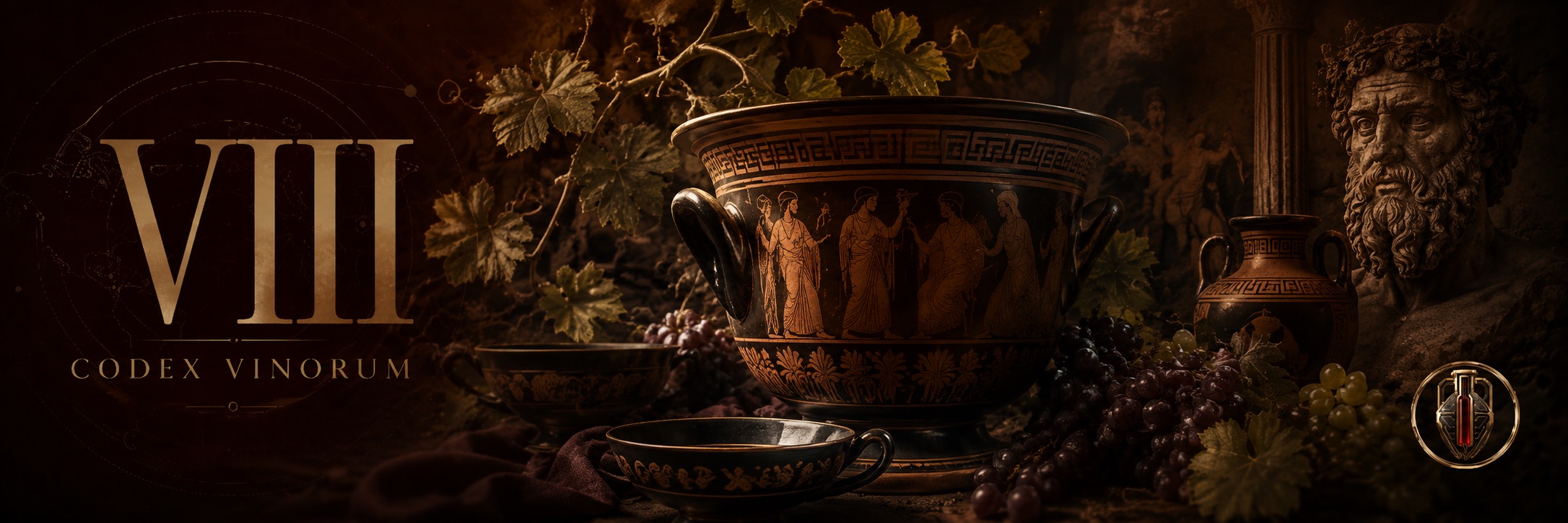
Wine existed in the Aegean world long before Classical Greece. By the second millennium BC, it was already embedded in production, exchange, religious life and elite consumption — Greek societies later transformed it into one of their most powerful cultural languages.
The Greeks dedicated to Dionysus — god of vegetation, fertility, theater, altered consciousness and the unstable boundary between order and ecstasy — one of the most important cults of their religion; from Greek theater and Dionysian festivities came tragedy and comedy as art forms. Greek religion didn't treat wine as harmless — it treated it as powerful: it could inspire, unite, release social restraint, and also destroy judgment.
The symposium
The true social stage for Greek wine was the symposion — the symposium —, a structured gathering, particularly associated with aristocratic male society. Participants reclining on couches drank, listened to music, recited poetry, played games and discussed politics, philosophy, desire and war. The event had rules, roles and equipment: the krater mixed wine and water; the kylix served as a drinking cup; the psykter could cool wine; the symposiarch directed the sequence and strength of drinking.
The symposium was convivial, but it wasn't socially neutral — it reflected privilege, citizenship, gender hierarchy and exclusion. Drinking pure wine was seen as barbaric; mixing wine with water represented controlled participation in intoxication — civilization was expressed not by refusing wine, but by knowing how to drink it.
Regional reputation
Greek wines from places like Chios, Thasos, Lesbos and Rhodes acquired commercial reputations. Amphora forms and stamps helped traders and authorities identify production networks. This wasn't yet a modern protected designation of origin, but it established a durable concept: the place named on a wine could change its value — regional reputation had become an economic asset.
Behind every label is a story of origin, grape and technique — the same logic that powers Amphorapp.
Rome: wine becomes a system
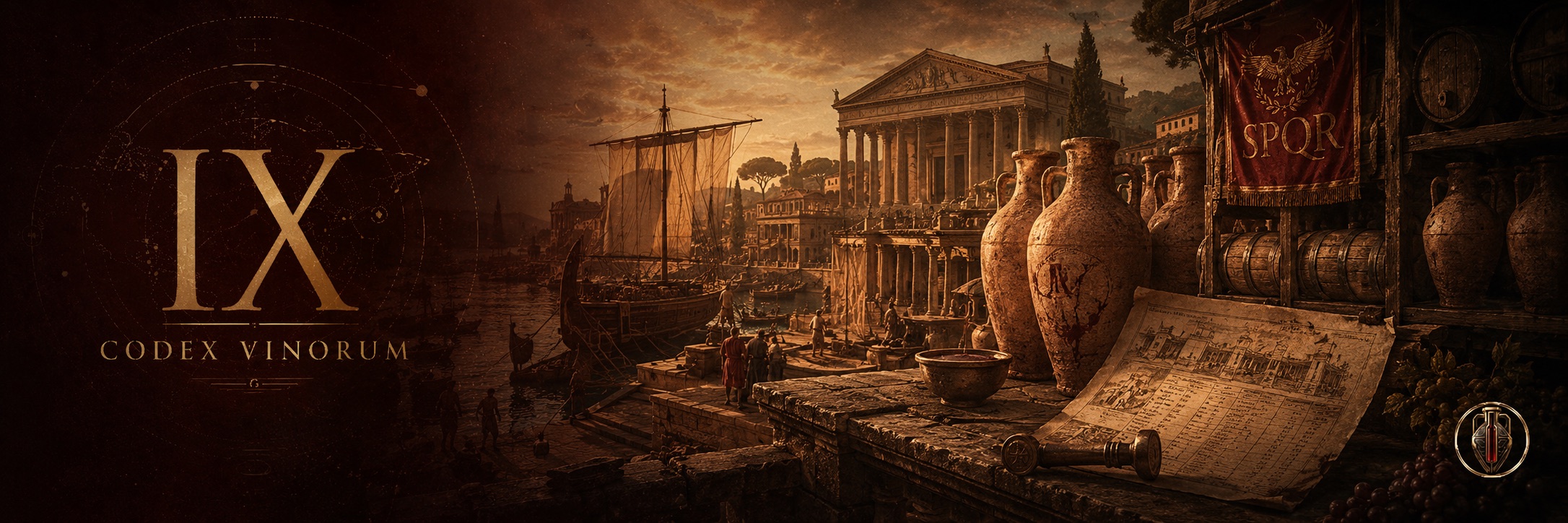
Rome didn't introduce the first vines to every territory it conquered — wine cultures already existed in parts of Italy, Iberia, southern Gaul, Greece, the Balkans and the eastern Mediterranean. Roman power did something different: it expanded, integrated, taxed, documented and commercialized viticulture on an imperial scale.
Viticulture followed roads, ports, military settlement, urban demand and agricultural investment. Vineyards developed around villas, colonial farms and market centers — research in Roman Gaul shows that commercial grape growing could be attractive even to comparatively modest colonial farmers.
Wine supplied households, taverns, soldiers, cities, religious ceremonies, elite banquets, medical use and long-distance trade. At Oplontis, near Vesuvius, archaeological evidence indicates storage capacity sufficient for the shipment of tens of thousands of liters of wine.
Roman wine knowledge
Roman agricultural authors discussed vineyard location, soil, pruning, planting density, grape varieties, yield, labor, fermentation, storage, defects, aging and market value. Roman producers distinguished wines by origin, age and reputation — some famous wines were valued for long maturation, though many ordinary wines were consumed young.
Roman wines could be treated with resins, pitch, herbs, seawater, concentrated must and aromatic substances; lead compounds were used in some preparations, particularly in the processing of sweetened or reduced must — this could produce desirable sweetness and texture while creating severe toxic risk. Ancient wine wasn't one style — it ranged from simple local beverages to aged luxury wines, medicinal mixtures and heavily treated products.
Amphorae as data
Roman transport amphorae could carry painted inscriptions — tituli picti — and stamped marks that, depending on period and product, might record contents, capacity, origin, owner, merchant, age, administrative control and workshop. Flat-bottomed Gaulois 4 amphorae became widely used in the wine trade of Roman Gaul; some were coated with pitch and carried information about wine, capacity or ownership. The Roman amphora was packaging, measurement, advertisement and document, all at once.
The medieval wine world

The fall of the Western Roman Empire didn't end European viticulture, but it changed the scale and structure of production.
Long-distance commercial networks contracted in some regions. Vineyards remained important around towns, estates, monasteries and areas with reliable demand. In parts of Western Europe, profitable production became concentrated among landholding elites and the Church, while local farmers continued smaller-scale cultivation.
The Church and the vineyard
Wine was necessary for Eucharistic celebration, but religious demand alone doesn't explain medieval viticulture. Monastic and ecclesiastical estates could offer continuity of landholding, written administration, organized labor, cellars, regional exchange and long-term observation of sites. Religious institutions helped preserve and develop vineyards in Burgundy, the Rhine, the Loire, Iberia, Central Europe and elsewhere — but the romantic image of monks single-handedly inventing fine wine oversimplifies a much broader social history.
Wine as food and medicine
Medieval wine was often consumed young. It could be diluted, spiced, sweetened or used in medicinal preparations.
Wine quality varied enormously — spoilage, oxidation and volatile acidity were common risks, transport and storage were difficult, and barrels usually served as commercial containers rather than long-term maturation vessels in the modern sense. Medieval medical texts could classify wine according to color, age, strength and perceived effects on the body — wine belonged simultaneously to diet, pharmacology and hospitality.
Knowledge across cultures
The medieval history of wine can't be separated into an isolated Christian West and a grape-free Islamic world. Across Islamic societies, grape cultivation continued for food, raisins, verjuice, syrups and other products. Greek and Byzantine scientific knowledge was translated, studied and expanded — a thirteenth-century Arabic manuscript of Dioscorides, for example, includes a scene of grape treading accompanying discussion of medicinal wine. Wine history survived through multiple cultures, languages and legal systems.
Vineyard landscapes become heritage
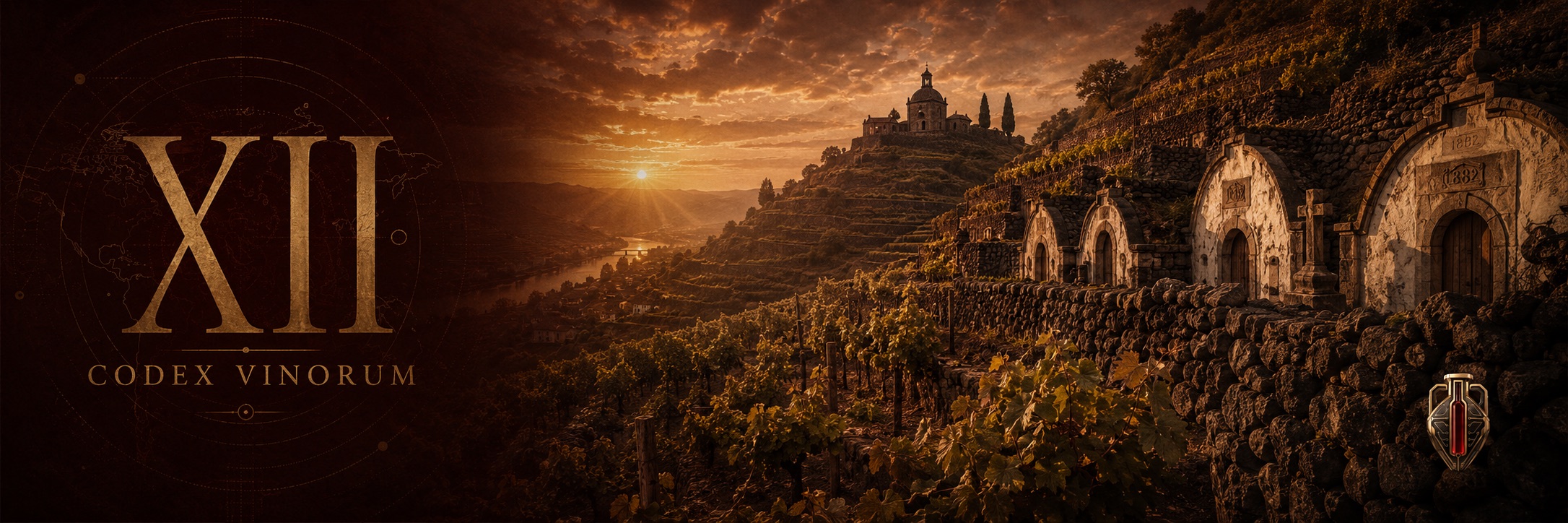
As viticulture continued across centuries, wine regions became more than areas of agricultural production — they became cultural landscapes.
Terraces, walls, roads, villages, presses, cellars and ports were shaped by generations of adaptation to slope, soil, water, wind, frost, humidity, trade access and political boundaries.
Tokaj
The Tokaj region preserves a landscape of vineyards, villages and deep cellar networks connected to a wine tradition documented across centuries. Its production and quality management have been regulated for nearly three hundred years, while the legal delimitation of the wine region dates to 1737.
Pico
On Pico Island in the Azores, growers built thousands of small basalt-walled plots to protect vines from Atlantic wind and salt spray. The vineyard landscape demonstrates how wine production can transform an apparently hostile environment through accumulated local knowledge.
The landscape is part of the wine
A vineyard region is not only geology and climate — it also contains inherited varieties, pruning traditions, labor systems, property structures, roads and ports, legal rules, architecture, ritual, cuisine and reputation. Terroir is both natural and human.
The vine crosses oceans
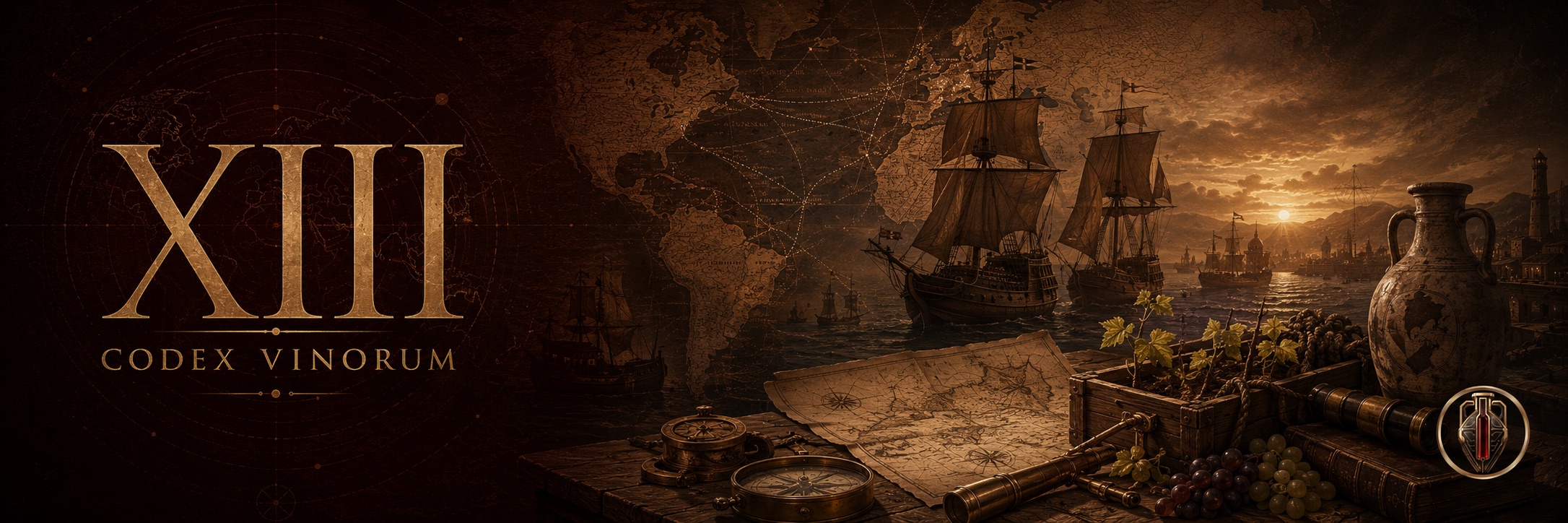
European maritime expansion carried Vitis vinifera far beyond its historic Eurasian and Mediterranean zones.
Vines traveled with colonists, missionaries, merchants and imperial administrations. They were planted for religious service, household consumption, commerce and agricultural experimentation — viticulture expanded into the Atlantic islands, Mexico, Peru, Chile, Argentina, South Africa, North America, Australia and New Zealand.
The first successful vineyards weren't simply copies of Europe — growers had to adapt to new soils, rainfall patterns, altitude, heat, diseases and labor systems. In the Portuguese Atlantic, the basalt vineyard landscape of Pico developed from the fifteenth century; in Spanish America, vines spread through Mexico and Peru before becoming established farther south — UNESCO documentation for traditional Pisco production connects early Peruvian harvests and wine production to the mid-sixteenth century.
Expansion and inequality
The global spread of wine was also part of colonial history. Vineyards could depend on dispossession of land, forced or enslaved labor, missionary settlement, imperial trade restrictions, unequal access to ownership and imported agricultural systems.
A technically serious history must recognize both sides of this expansion: the creation of new wine cultures, and the political and human costs through which some were established. New World wine is not merely European wine made elsewhere — it is the result of transplantation, adaptation, conflict, exchange and new cultural identities.
The bottle changes wine
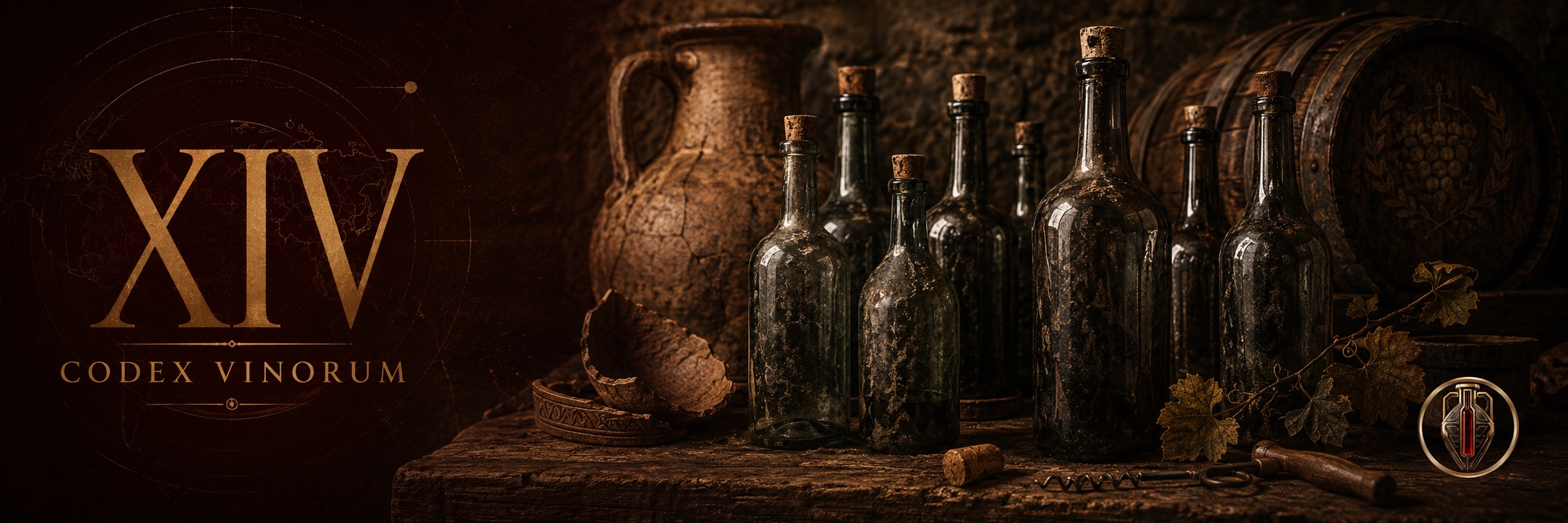
For most of history, wine was produced and moved in ceramic vessels, skins or wooden containers. Glass existed in the ancient world, but the modern wine bottle required glass strong and consistent enough for transport, pressure and aging.
In seventeenth-century England, stronger coal-fired glass production made thick bottles increasingly practical. Combined with reliable cork closures, the bottle gradually became more than a serving container: it became a controlled environment in which wine could evolve. Before the bottle, wine was commonly sold from amphora, barrel, cask, jug or merchant container — consumers often bought a quantity rather than a sealed, producer-branded bottle.
The bottle creates a new relationship with time
A sealed bottle allowed wine to remain with less oxygen exposure, mature slowly, develop sediment, preserve producer identity, travel in smaller units, become collectible, and connect a vintage to an individual object.
The concept of the cellar changed — wine could now be intentionally held not only in bulk, but bottle by bottle. Natural cork is elastic and provides a practical seal, but individual corks vary — their permeability, integrity and possible contamination affect development. The history of bottle aging is therefore also the history of closure technology. The bottle didn't simply package wine — it created the modern idea of wine aging as a private, trackable experience.
Origin becomes law
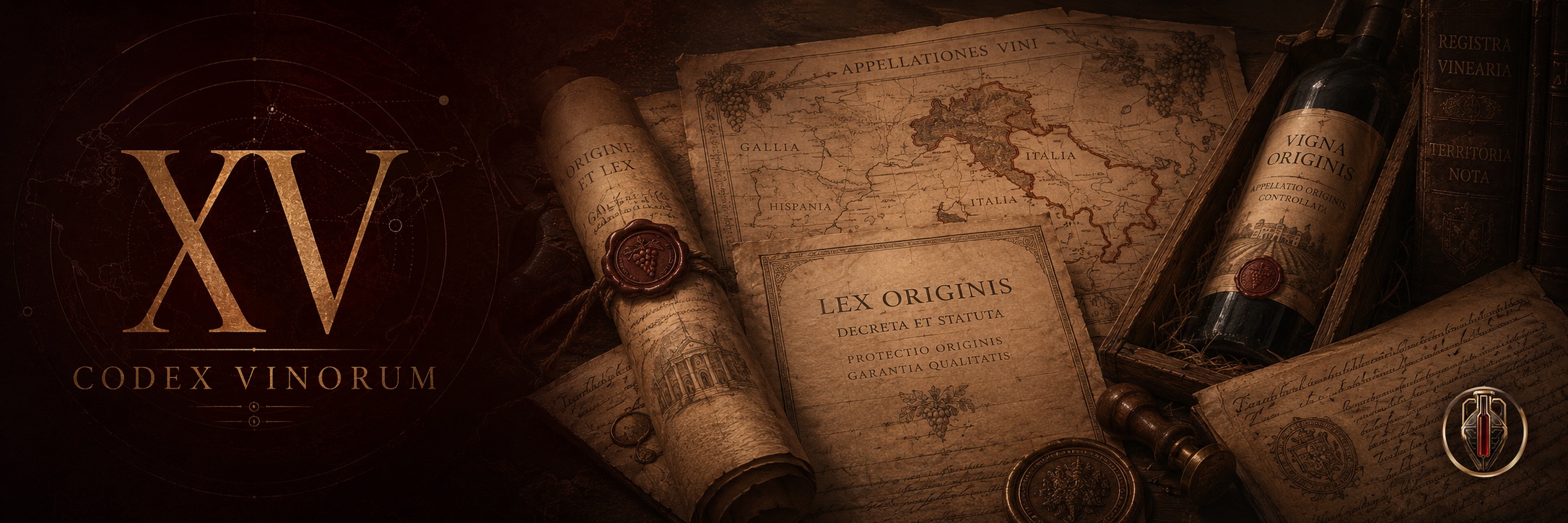
Regional reputation existed in antiquity, but modern appellations emerged from new legal, economic and scientific conditions.
By the nineteenth and twentieth centuries, wine markets faced fraud, false geographic claims, adulteration, imitation, inconsistent definitions, industrial substitutes and disputes over names — origin had to become legally defensible.
The OIV notes that the protection of wine origin developed partly in response to nineteenth-century fraud and international efforts to protect industrial property; the organization adopted an early definition of appellation of origin in 1947 and has continued to refine international concepts of geographic indication and appellation.
Geographic indication
A geographical indication identifies wine as originating in a specific area where a quality, reputation or characteristic is essentially attributable to that origin.
Appellation of origin
An appellation of origin establishes a stronger relationship between the wine and its geographical environment, including natural and human factors — under the OIV definition, harvesting and transformation into wine occur within the defined area.
Modern wine origin may regulate boundary, permitted varieties, vineyard practices, yield, ripeness, alcoholic strength, production methods, aging, analytical standards, labeling and sensory approval — an appellation is not merely a prestigious name, it's a governance structure. Geographic status does not guarantee personal preference or perfect quality: a legally compliant wine may be disappointing, and a wine outside a famous appellation may be exceptional. Origin explains context — it should not replace judgment.
Phylloxera: the root crisis
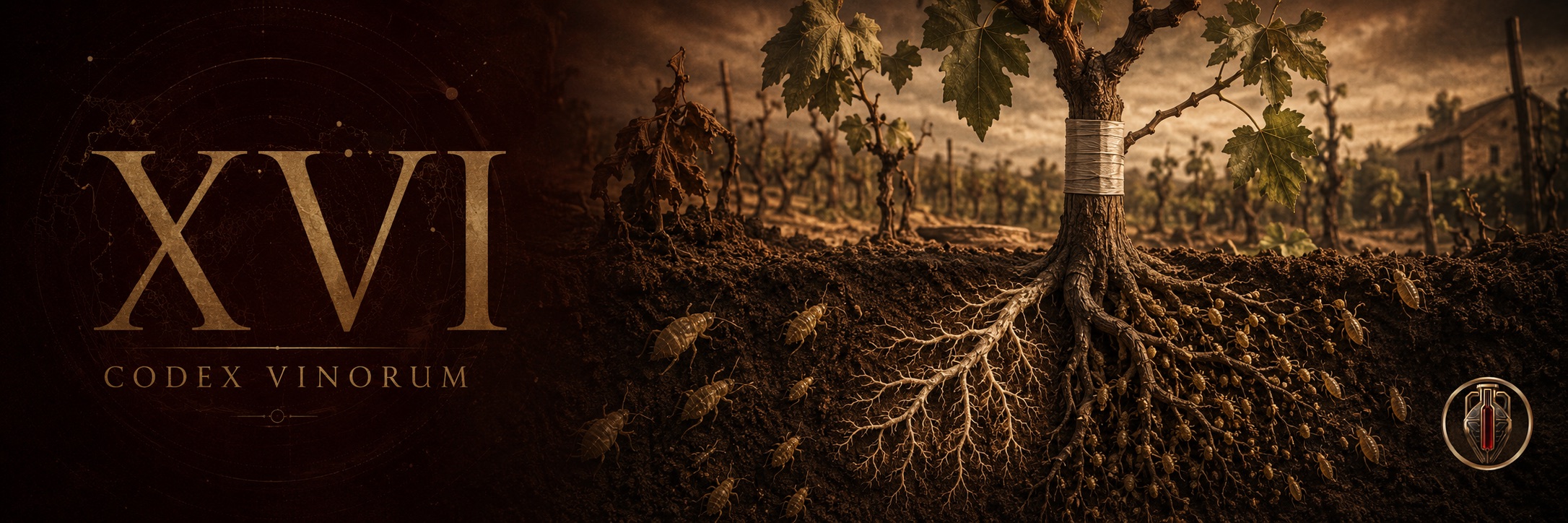
In the nineteenth century, European vineyards were confronted by a biological disaster.
Grape phylloxera — Daktulosphaira vitifoliae — is a small insect native to North America. American vine species had evolved varying degrees of tolerance, while European Vitis vinifera roots were highly vulnerable. Introduced accidentally through international movement of plant material, phylloxera spread through vineyards and attacked roots below ground — vines weakened, yields collapsed and entire landscapes required reconstruction.
Genomic research has linked the European invasion to North American populations, probably from the upper Mississippi region. INRAE estimates that the crisis destroyed approximately half of the vines in France.
The solution beneath the soil
The most successful response was grafting European fruiting varieties onto resistant American rootstocks — the upper part of the vine could remain Cabernet Sauvignon, Pinot Noir, Nebbiolo, Riesling, Tempranillo or Sangiovese, while the root system came from selected American species or hybrids.
Most commercial Vitis vinifera vineyards in phylloxera-affected areas are now grafted; ungrafted vines survive in particular conditions, including sandy soils, isolated islands, protected regions, areas without established phylloxera, and exceptional historic vineyards.
American rootstocks did more than save vines from one insect — they created a new field of rootstock selection involving drought tolerance, limestone tolerance, vigor, salinity, soil adaptation, water uptake and nematode resistance. Every grafted vine is a visible union of European fruit and American survival.
Pasteur reveals the life inside wine
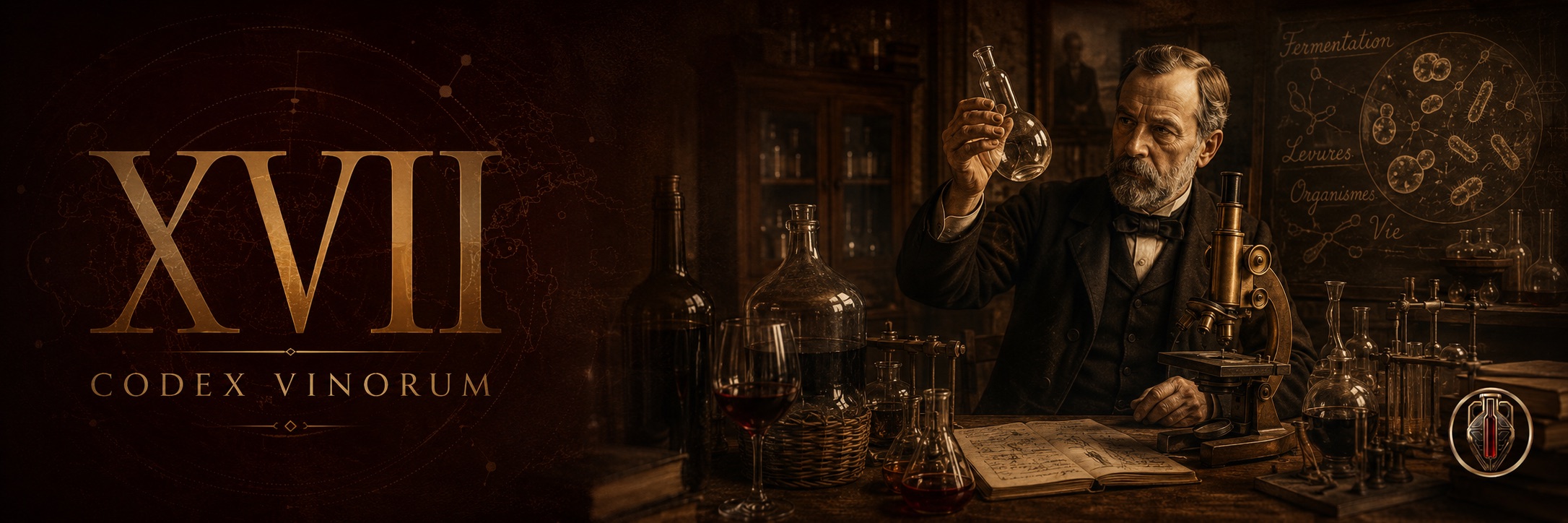
While phylloxera attacked vines, another revolution was taking place inside the cellar.
Fermentation had been practiced for thousands of years, but its mechanism remained debated. Louis Pasteur demonstrated that alcoholic fermentation was associated with living microorganisms rather than being a purely spontaneous chemical decomposition. His work helped establish that microorganisms perform specific fermentations, that contamination can produce specific defects, that sterile media can be experimentally inoculated, and that microbial life can be controlled through sanitation and temperature — principles that became foundations of microbiology.
Wine doesn't sour by accident
French producers struggled with wines that became sour, bitter, oily or otherwise unstable. At the request of Napoleon III, Pasteur studied wine alteration and showed that different forms of spoilage were associated with different microorganisms.
He developed a method of heating wine moderately — approximately 55–60 °C in his historical protocol — to control harmful organisms while preserving the wine's sensory character. His research culminated in Études sur le Vin, published in 1866.
After Pasteur, fermentation could increasingly be understood as a biological process that could be observed, isolated, measured, repeated and controlled. Wine moved from inherited empirical knowledge toward modern enology — traditional craft didn't disappear, it gained a scientific language.
The modern scientific cellar
The twentieth century transformed winemaking through advances in chemistry, microbiology, engineering and refrigeration.
Producers gained greater control over fermentation temperature, yeast selection, malolactic fermentation, oxygen, sulfur dioxide, filtration, clarification, stabilization, sanitation, bottling and closure performance. Temperature-controlled fermentation allowed producers to preserve volatile aromas, manage extraction and reduce microbial risk — particularly important for aromatic white wines, rosés, sparkling bases and warm-climate production.
Stainless steel
Stainless-steel tanks offered inert surfaces, effective cleaning, precise temperature control, protection from unwanted oxygen and repeatable production. They didn't make older vessels obsolete — instead, winemakers gained a broader range of tools: stainless steel, oak barrels, large wooden vats, concrete, clay amphorae, qvevri, glass and ceramic composites. The question became not which vessel was universally superior, but which vessel served the intended wine.
The laboratory enters the winery
Modern analysis can measure sugar, alcoholic strength, total acidity, volatile acidity, pH, sulfur dioxide, microbial populations, dissolved oxygen, color, phenolic composition and pressure. Wine remains sensory and cultural, but it is also analytically visible.
The Judgment of Paris
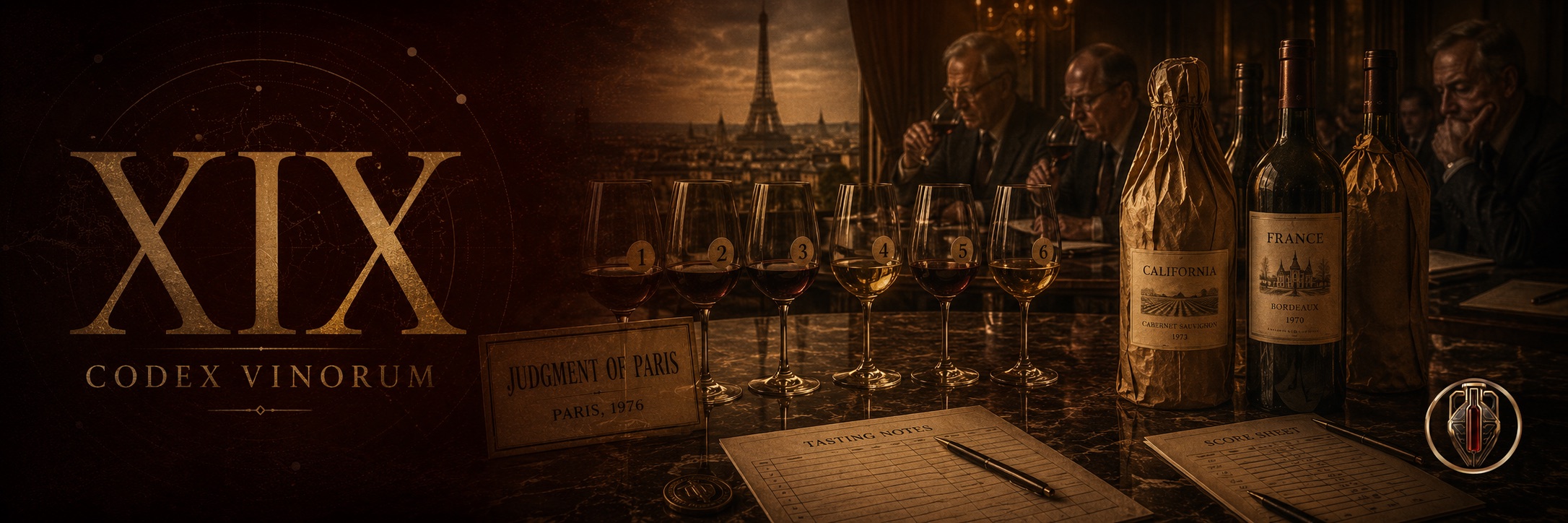
On May 24, 1976, eleven experts — nearly all French — tasted wines blind in Paris and, without knowing it, changed the world wine hierarchy forever.
The event was organized by Steven Spurrier, a British wine merchant based in Paris who sold exclusively French labels, and his American colleague Patricia Gallagher, of L'Académie du Vin. The idea seemed harmless, almost a formality: compare France's most renowned whites and reds against still-unknown productions from California, in a blind tasting organized to celebrate the American bicentennial. Spurrier, who sold only French wine, was certain the Californians wouldn't stand a chance.
The eleven judges — sommeliers, editors of specialized magazines and producers, the cream of French criticism — tasted, without knowing the origins, six California Chardonnays against four white Burgundies, and six California Cabernet Sauvignons against four red Bordeaux. Each wine received a score of up to 20 points, with no predefined criteria — each judge followed their own judgment. The scores of nine French judges were what placed two California wines in first place.
The result no one expected
In both categories, the highest-rated wine came from California: the 1973 Chardonnay from Château Montelena among the whites, and the 1973 Cabernet Sauvignon from Stag's Leap Wine Cellars among the reds — beating out established names like Château Mouton-Rothschild, Château Haut-Brion and Meursault Charmes Roulot. The winning bottles later entered the permanent collection of the Smithsonian's National Museum of American History.
The reaction was immediate. When the results were read out, French judge Odette Kahn, editor of the Revue du Vin de France, demanded her scorecard back — and would later try to publicly downplay the tasting's result.
The press dubbed the event the "Judgment of Paris," an ironic nod to the Greek myth. The tasting didn't prove that French wine was inferior, nor did it disprove terroir, tradition or regional identity — it demonstrated that high-quality Chardonnay and Cabernet-based wines weren't an exclusively French achievement.
It challenged inherited assumptions and accelerated international recognition of California and other emerging wine regions — the United States, Australia, New Zealand, Chile, Argentina and South Africa could no longer be dismissed automatically as peripheral producers. In 2026, the Smithsonian commemorated the event's fiftieth anniversary, describing it as a turning point in how American wine was perceived internationally.
The global wine world
Modern wine cannot be divided simply into an old Europe and an imitative New World.
Every wine region combines inherited and adapted elements: imported and indigenous varieties, local climate, geology, migration, labor, law, market demand, technology, cuisine and cultural memory.
Indigenous varieties return
The twentieth century favored globally recognized grapes such as Cabernet Sauvignon, Merlot, Chardonnay, Sauvignon Blanc, Syrah and Pinot Noir — their success created commercial clarity but sometimes reduced local diversity. Today, renewed interest in indigenous varieties is restoring attention to genetic heritage, regional identity, climate adaptation, forgotten styles, small producers and traditional knowledge. A grape variety is not only a flavor profile — it is a biological archive.
Tradition and innovation
Contemporary winemakers may work with spontaneous or selected yeast, stainless steel or clay, new oak or neutral vessels, filtration or minimal intervention, precision viticulture, regenerative agriculture, ancestral sparkling methods, dealcoholization and nontraditional blends.
Tradition and technology are not necessarily opposites — a clay vessel can be monitored by digital temperature sensors, a historic vineyard can be mapped by satellite, an indigenous grape can be studied through modern genetics. Wine has always evolved by combining memory with invention.
Climate, sustainability and the future of wine
Wine is unusually sensitive to environmental conditions because its identity is tied to place, season and vintage.
Changes in temperature, drought, rainfall, frost, fire, pests and harvest timing affect yield, sugar accumulation, acidity, phenolic ripeness, aroma, disease pressure, water availability and regional suitability. The OIV identifies climate adaptation, greenhouse-gas reduction, biodiversity, vineyard inputs, packaging, logistics and social viability as central challenges for the sector — its sustainability principles treat environmental, economic, social and cultural dimensions as interconnected.
Adaptation
Wine regions are responding through later-ripening varieties, drought-tolerant rootstocks, canopy management, soil cover, agroforestry, water management, altered orientation, higher-altitude sites, harvest-time adjustment, genetic conservation and disease-resistant varieties. The objective isn't simply to preserve every historical practice unchanged — it's to preserve cultural identity while allowing vineyards to survive.
Sustainability is not a single certification
A technically credible evaluation should consider soil health, biodiversity, water, energy, emissions, packaging, worker welfare, economic viability, cultural continuity, traceability and long-term resilience. A vineyard cannot be environmentally sustainable if its community is economically impossible to maintain.
Wine in religion
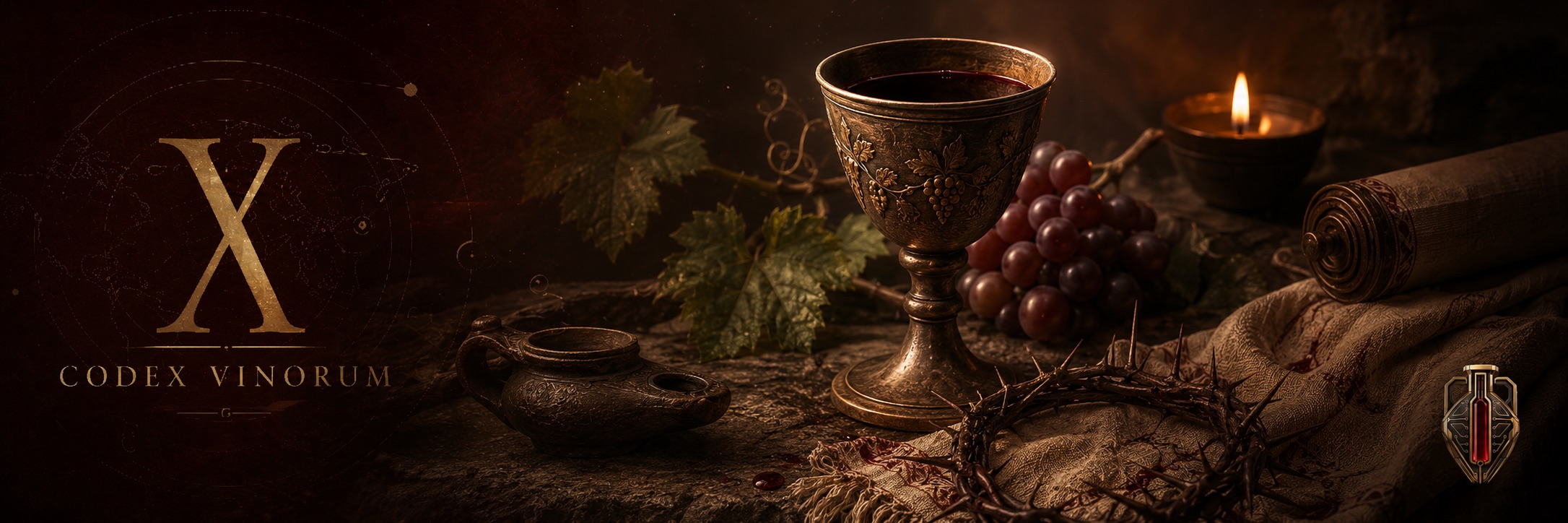
Long before it became a product, a collection, or an object of study, wine was a symbol — present in rituals, celebrations and sacred stories around the world.
Across different religious traditions, it appears linked to fertility, abundance, celebration, memory, sacrifice and transformation. This presence is no accident: wine emerges from an invisible process in which the grape becomes something new. To ancient societies, fermentation seemed almost supernatural — a passage between nature and culture, matter and spirit.
Judaism: blessing, memory and sanctification
In Judaism, wine holds a central place in family and religious rituals. The Kiddush, recited over a cup of wine at the start of Shabbat and certain festivals, sanctifies time and marks the passage from everyday life into sacred space.
Wine is also present at Passover, where the cups drunk during the Seder represent stages in the liberation of the Hebrew people. In this context, it is more than a drink: it works as an instrument of collective memory, identity and continuity between generations.
Christianity: blood, covenant and communion
In Christianity, wine takes on one of its deepest religious meanings. In the account of the Last Supper, Jesus offers wine to his disciples as a sign of his blood and of the new covenant. From that moment on, it becomes a central element of the Eucharist, or Holy Communion.
Different Christian traditions interpret this presence in different ways. For some, the consecrated wine truly becomes the blood of Christ; for others, it remains a symbol of memory, communion and faith. In all of them, though, the cup represents a bond: between the divine and the human, between sacrifice and redemption, between the individual and the community.
The first miracle attributed to Jesus in the Gospel of John — turning water into wine at the wedding at Cana — further reinforces the link between wine, celebration, hospitality and abundance.
For centuries, Christian monasteries played a decisive role in preserving and developing European viticulture. Monks cultivated vineyards, recorded differences between plots, refined production methods and helped shape regions that would later become world references.
A celebrated example of this contribution is Dom Pérignon, a Benedictine monk at the Abbey of Hautvillers in the Champagne region, at the end of the 17th century. He did not "invent" sparkling wine, as popular legend suggests, but he was responsible for decisive technical advances: he perfected the art of assemblage — blending grapes from different vineyards to balance flavor and quality — championed rigorous pruning and low yields per vine, and refined pressing methods to keep the dark skins of red grapes from staining the pale must.
His name became synonymous with winemaking excellence — and, centuries later, was adopted for one of Champagne's most famous prestige cuvées, from the house of Moët & Chandon.
Ancient Greece: Dionysus, ecstasy and civilization
In Greek religion, wine was consecrated to Dionysus, god of the vine, fertility, theater, ecstasy and celebration. His cult expressed wine's power to liberate, inspire and bring people closer to the gods.
The Dionysian festivals gave rise to major forms of Greek theater, including tragedy and comedy. Wine was tied to music, dance, masks and collective celebration.
At symposia, gatherings built around drinking, wine was usually mixed with water — a ritual of sociability that prized conversation, poetry and company.
Rome: cult, power and daily life
The Romans absorbed Dionysus under the name Bacchus, keeping the association between wine, fertility and celebration. Wine was deeply woven into both domestic and public religion in Rome: it was offered in libations to the gods, to ancestors and to the protective spirits of the household.
Pouring wine on altars, tombs or the ground was a way of communicating with the sacred world — a gesture of gratitude and of alliance between the living and the divine.
Zoroastrianism and ancient Persian traditions
In ancient Persia, wine was linked to court life, celebration and ritual. In traditions connected to Zoroastrianism, fermented drinks featured in ceremonies and communal meals, as part of festive and social life.
Persian culture also preserved stories about wine's discovery, such as the legend of King Jamshid and the woman from his harem who, by chance, drank from a jar of forgotten grapes. That story — mythical as it is — celebrates wine as a gift found by accident.
In later Persian literature, wine became one of poetry's great images, standing for love, beauty and illumination.
Islam: prohibition and poetic transformation
Islamic teaching prohibits intoxicants and emphasizes the preservation of consciousness, prayer and social order — the Qur'anic prohibition connects intoxicants with hostility, distraction and loss of remembrance. Yet the history of grapes in Islamic societies is more complex than prohibition alone: viticulture continued for fresh grapes, raisins, syrups, vinegar, verjuice, medicinal preparations, trade and consumption by permitted or non-observant communities.
In Persian and Arabic poetry, wine developed both literal and figurative meanings. In Sufi-influenced contexts, wine might symbolize divine illumination, love, inspiration or release from the ego — the cup could represent the human heart receiving spiritual knowledge. The literal and metaphorical meanings shouldn't be confused: poetry could celebrate actual drinking, mystical intoxication, social transgression, or several meanings at once.
Traditional religions and offering rituals
In many traditional religions across Europe, the Caucasus, the Mediterranean and the Near East, wine was used as an offering to gods, to the dead and to the forces of nature. It could be poured onto the earth, placed in tombs or shared in ritual meals.
In these contexts, drinking together created commitment. The shared cup sealed alliances, celebrated harvests, marked weddings and accompanied funerals. Wine formed the link between the living, their ancestors and their land.
A recurring religious language
Throughout history, wine has become a recurring religious language across many cultures — it isn't a universal religious symbol, since entire traditions prohibit alcohol or assign wine no central role, but it is one of history's most persistent. It can represent:
- blood and covenant
- fertility and abundance
- ecstasy and inspiration
- memory and identity
- hospitality and communion
- spiritual transformation
From the ritual amphora to the Eucharistic cup, from the Roman libation to Persian poetry, wine crossed civilizations because it was never seen as just a drink. It was understood as transformed matter — and, for that reason, as a symbol of humanity's own capacity to turn nature into culture, food into rite, and experience into meaning.
Why the amphora matters
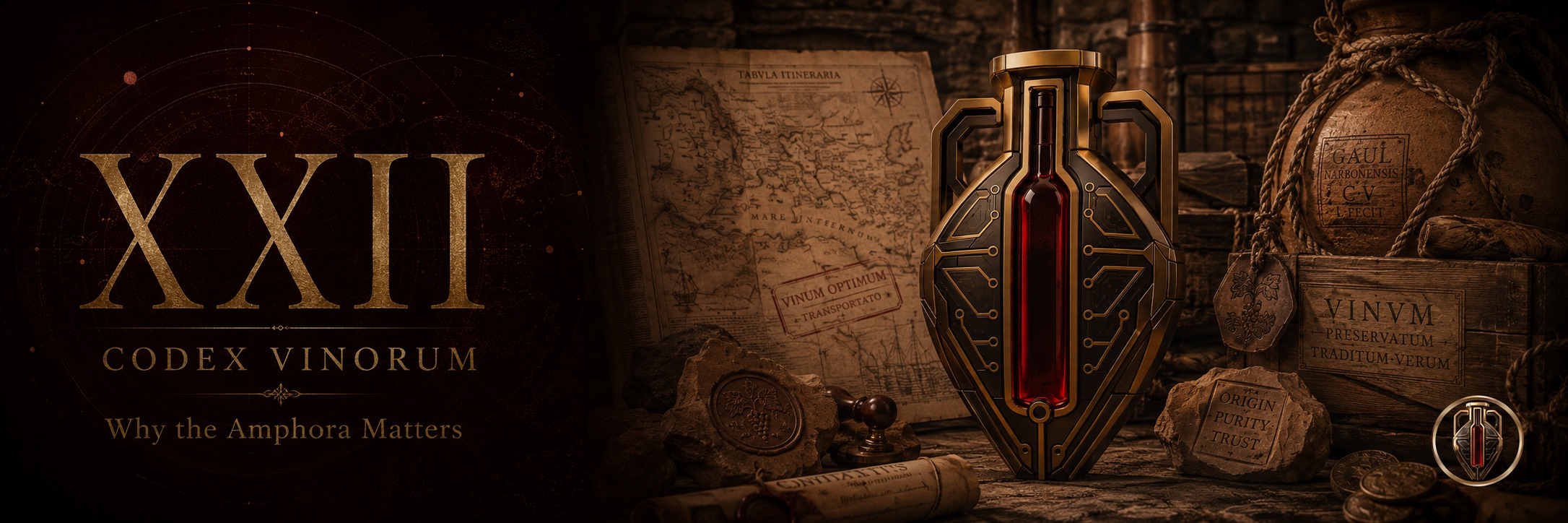
Of all the inventions the ancient world applied to wine, none traveled as far — or lasted as long — as the amphora.
A bottle, a contract and a document — all in one object
The amphora wasn’t just packaging. Its pointed bottom shape let pieces be wedged into racks, sand, straw or interlocking arrangements in a ship’s hold, with no need for shelving. Because ceramic is porous, amphorae were often lined internally with pitch or resin to reduce leakage and protect the contents through long sea voyages.
And stamps, inscriptions and painted marks on the neck — which could record the workshop, producer, contents, capacity, origin or consular control date, depending on period and region — worked as invoice, certificate of provenance and trademark, all at the same time.
Thousands of amphora fragments recovered from the bottom of the Mediterranean are today archaeologists’ main source of information about trade routes, prices and wine export volumes in antiquity — a kind of fossilized invoice, two thousand years later.
Marks, stamps and inscriptions
Depending on time and place, an amphora might carry a workshop stamp, producer mark, painted inscription, capacity, product type, owner, merchant, place of origin, and date or administrative reference. Not every amphora carried all this information, and there was no single universal labeling system — together, though, these marks created a chain of identity.
Roman amphorae from Gaul could carry painted information about wine type, age, capacity or ownership, while identical producer marks found in distant ports allow archaeologists to reconstruct distribution routes.
The archaeological database beneath the sea
Broken amphorae are among the most valuable documents of ancient trade. Fragments recovered from ports, villas, warehouses, shipwrecks, rubbish deposits and military settlements help archaeologists reconstruct production zones, chronology, consumption patterns and commercial networks — an amphora fragment can preserve what a written history forgot.
It’s this same logic — preserving, identifying, giving provenance to every bottle — that inspires Amphorapp: a digital amphora for the world’s beverages, where every label you scan gets the same care the ancients gave every clay seal.
From clay seal to digital provenance
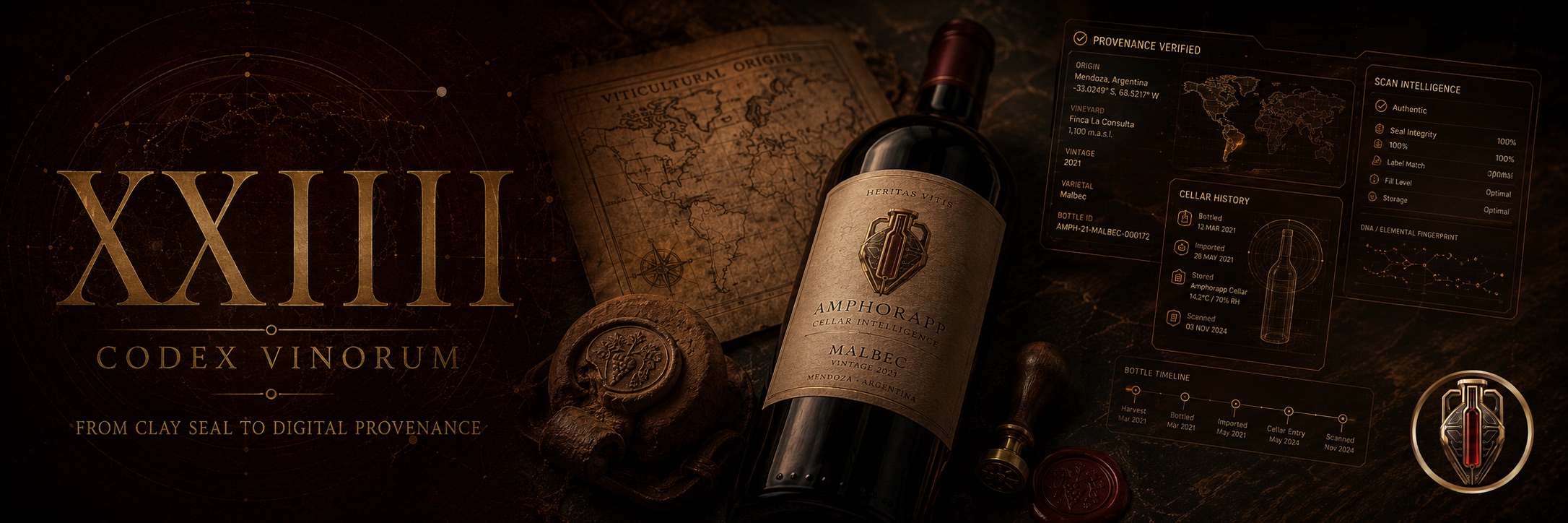
The ancient amphora combined physical preservation with information. Its shape protected the product; its stamp or inscription connected the contents to human responsibility.
The modern bottle inherited part of that role: label, vintage, origin, lot, producer, importer, closure, certification. Digital technology adds a new layer — a wine can now be connected to vineyard, coordinates, climate, geology, varieties, producer history, vintage conditions, technical analysis, purchase record, cellar movement, service history, tasting notes, photographs, provenance and drinking window.
The digital amphora
Amphorapp takes its meaning from this continuity. The objective isn't to imitate an ancient vessel visually — it's to preserve what the amphora represented: identity, custody, memory, origin, movement, trust. A scanned label becomes the beginning of a record rather than the end of a search. Every bottle can carry two histories: the history of the wine before it reached its owner, and the history created after it entered the cellar.
Eight thousand years in one glass
A glass of wine contains more than fermented grape juice.
It contains a plant domesticated over generations, a landscape shaped by labor, microorganisms that transform sugar, vessels designed to control time, trade routes that connected civilizations, religious meanings, scientific discoveries and laws built to defend origin.
Wine survived because it was never only one thing. It was food, medicine, offering, commodity, tax, symbol, craft, science and memory. Its history is not a straight path from primitive jars to modern technology — ancient techniques continue beside stainless steel, indigenous varieties return after periods of neglect, clay vessels reappear inside laboratories equipped with sensors, and regions once considered peripheral become global references.
The future of wine will not be preserved by nostalgia alone. It will depend on the ability to unite historical knowledge, scientific accuracy, environmental responsibility, cultural respect, reliable provenance and useful technology.
Tradition preserved. Intelligence revealed. Amphorapp is the digital amphora of wine heritage — preserving the origin, knowledge and living history of every bottle.
Sources and editorial notes
- McGovern, P. et al. — "Early Neolithic wine of Georgia in the South Caucasus", Proceedings of the National Academy of Sciences (PNAS), 2017 — archaeological origin of wine and chemical markers in Neolithic pottery.
- UNESCO — "Ancient Georgian traditional Qvevri wine-making method", Representative List of the Intangible Cultural Heritage of Humanity, inscribed 2013; documentation on the Tokaj and Pico wine landscapes and traditional Pisco production.
- Cambridge University Press & Assessment — archaeological publications on Areni-1, Phoenician trade at Tell el-Burak, viticulture in Roman Gaul, Oplontis, the medieval wine world and the origin of the modern glass bottle.
- The Metropolitan Museum of Art — collections and documentation on Egyptian jar labels from Malqata, Phoenician and Cypriot amphorae, the Greek symposium, Greco-Roman libation and medieval scientific manuscripts.
- Louis Pasteur, Études sur le Vin, 1866 (Institut Pasteur) — scientific foundation of fermentation and pasteurization.
- Inrae — estimates on phylloxera's impact on French vineyards.
- Taber, George M. — original reporting in Time magazine, 1976, and the book Judgment of Paris, 2005 — reference account of the 1976 blind tasting; Smithsonian's National Museum of American History — permanent collection and fiftieth-anniversary commemoration.
- Quran.com; Iranica Online — the Islamic prohibition of intoxicants and the poetic transformation of wine in Persian and Sufi tradition.
- Vaticano; My Jewish Learning — Christian and Jewish interpretations of wine in ritual and sacrament.
- OIV — International Organisation of Vine and Wine — international definitions, the history of wine-origin protection, and the analytical standards cited in the Practical Guide.
Editorial and technical note
This history distinguishes archaeological evidence, cultural tradition and scholarly interpretation. Dates represent current evidence and may be revised by future discoveries. Primary international references: archaeological publications, UNESCO cultural-heritage records, museum collections, the International Organisation of Vine and Wine, scientific institutions and documented historical archives. Recommended review cycle: annual editorial review, with immediate revision when relevant archaeological, scientific or regulatory evidence changes.
Grapes, regions and your cellar's history, all in one place
- Scan the label and see its origin instantly
- Full archive of grapes and regions
- Personalized pairing for every dish
From the right temperature to glasses, bottles and how to read the label — the full practical guide is on the next page.
Take the Codex Vinorum with you
Amphorapp brings together this history, the science of terroir, and a complete pairing guide in one living library — scan a label and discover the origin, the provenance, and the right recommendation, instantly. This is just a preview: registered members get the full library of grape varieties and regions, personalized pairings, and a running history of every bottle in their cellar.
Start Standard